

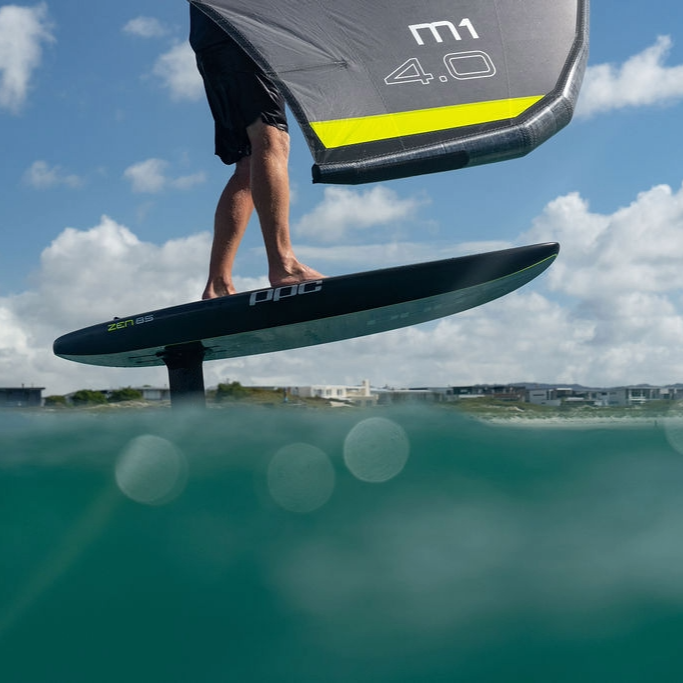
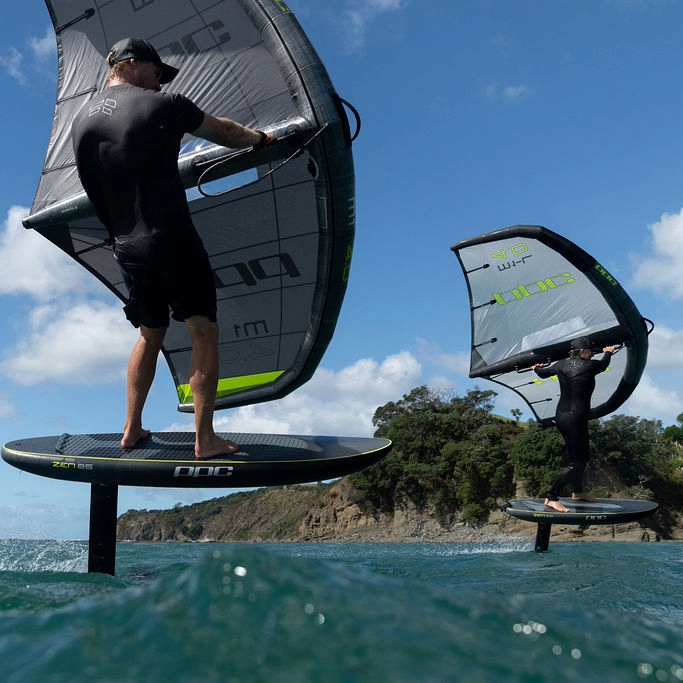
Downwind foiling is the most efficient way to surf ocean swell on a hydrofoil. No wind required. No wave. Just paddle, swell and the foil doing the work. This guide covers what downwind foiling is, the gear, the skills, and how to start.
Written by the PPC team, who design and test the Link board in Auckland — built specifically for fast paddle-ups and clean bump linking on the Hauraki Gulf.

What is downwind foiling?
Downwind foiling is hydrofoiling using ocean swell and your own paddle for power. You paddle hard for 5-15 seconds to reach take-off speed (around 6-8 knots). The hydrofoil generates lift, the board breaks free of the water, and you ride the energy in the ocean swell — silently, efficiently, sometimes for kilometres.
The discipline came out of Hawaii in the early 2010s, originally as SUP downwind on big boards. The shift to foils happened around 2018. Today's downwind boards are purpose-built — long, narrow, volume-rich at the right places, with tracking ridges and flat rockers for paddle-up speed.
How downwind foiling works
Three phases.
Paddle-up. You paddle hard from a standing start until the board reaches take-off speed. Long, narrow boards paddle faster than short, wide ones — that's why downwind boards look more like SUPs than wing boards. Technique matters: efficient stroke, good body position, momentum management.
Take-off. Once the board is moving fast enough, the foil generates lift. The board breaks free of the water. You stop paddling and shift to foil control.
Surfing the bumps. Ocean swell moves at predictable speeds. Once you're on foil, you can angle into a swell, ride its energy, then transition to the next one. Skilled riders chain bumps for kilometre-long flights.
The gear
Downwind board
Long, narrow, high-volume. The PPC Link is built for it — flat rocker, tracking ridge, full-carbon MCT construction, 91-128L volume range. Length runs from 7'6" to 8'6" depending on rider.
The R1 race foil board also handles downwind for lighter, more advanced riders. Most general-purpose wing foil boards make downwind harder than it needs to be — the volume is right but the length and outline aren't.
Foil
High-aspect, low-drag front wings work best for downwind. You want efficient lift at modest speed and clean glide between bumps. Mid-to-large surface area on a 75-85cm mast is typical. Race foils with high-aspect ratios become more relevant as you progress.
Paddle
A long carbon downwind foiling paddle is critical. The PPC downwind paddle has a carbon/kevlar blade for fast flat-water pop-ups, with adjustable or fixed length options and 90-115 sq in blade sizes. Paddle stiffness affects pop-up speed more than people expect.

Safety
Helmet, impact vest, leash. Downwind takes you offshore — sometimes far. Carry a way to signal: PLB, phone in waterproof pouch, flares for serious sessions. Don't downwind alone on first sessions.
The paddle-up — the hardest skill
Paddle-up is what separates downwind riders from people who own downwind boards. Three things matter.
Stroke efficiency. Reach forward, plant the blade vertical, pull with your body not your arms. Cadence over power. Five hard strokes done well beats fifteen sloppy ones.
Board trim. Stand far enough forward that the nose stays down, far enough back that the foil engages. The sweet spot moves as you accelerate.
Mental commitment. Paddle-up is anaerobic. You have to commit fully for 5-15 seconds. Half-hearted paddle-ups don't get you onto the foil.
Reading the swell
Once you're on foil, the game changes. You're trying to catch and ride the energy in ocean swells. Skilled downwind riders read the water two or three swells ahead, line up the angle, and use the foil's glide to bridge between bumps.
Start by riding straight downwind. Build the foil control in the simplest line. Once that's solid, start angling across the wind to catch better bumps.
Where to downwind foil
The classic downwind run needs:
- Consistent wind generating steady swell
- Deep enough water (foil masts need 1m+ clearance)
- A start point and a finish point with road access
- A shuttle driver or a buddy with a vehicle
New Zealand's Hauraki Gulf works in northerly and easterly conditions. Hawaii's Maliko run is the famous one. Most coastlines with prevailing wind produce rideable bumps if you know where to look.
How to start downwind foiling
1. Get foil time first. Wing foiling, SUP foiling, prone foiling — any foil time helps. The paddle-up is what's new for downwind, but foil control is non-negotiable.
2. Buy the right board. A dedicated downwind board cuts the learning curve in half. The Link is purpose-built. Trying to learn on a wing foil board is doing it the hard way.
3. Train the paddle-up on flat water. Before you go offshore, practise the paddle-up sequence on a sheltered bay. Get the technique dialled before the conditions get spicy.
4. Start on small swell days. Big swell is harder to read. 10-15 knot conditions produce manageable bumps for learning.
5. Buddy up. Don't downwind alone on your first sessions. Have a vehicle-shuttle plan and a buddy who can help if gear breaks.
Downwind foiling in Auckland
The Hauraki Gulf is one of the best downwind playgrounds in NZ. Easterly and northerly winds produce the steady swell trains downwind riders chase. PPC's Wairau Valley showroom stocks the Link and the downwind paddle, and the team can talk you through the local spots and conditions.
Common questions
What is downwind foiling?
Downwind foiling is hydrofoiling powered by ocean swells and your own paddle. You paddle-up to take-off speed, the foil lifts the board clear of the water, then you ride the bumps of ocean swell for kilometres. No wind required — you use the energy in the moving water.
What's the best downwind foil board?
Long, narrow and high-volume is the formula. The PPC Link is built specifically for downwind — flat rocker, tracking ridge, fast paddle-ups. Volume range 91-128L for typical adult riders. The R1 race board also handles downwind for lighter, more advanced riders.
How hard is downwind foiling to learn?
Harder than wing foiling. The paddle-up takes practice — you're working hard for short bursts to get to take-off speed. Most riders need 5-10 sessions to consistently get on foil. Once you're up, surfing the bumps is the addictive part.
What paddle do I need?
A long carbon downwind foiling paddle. The PPC downwind paddle uses a carbon/kevlar blade for fast flat-water pop-ups, with adjustable or fixed length and 90-115 sq in blade sizes. Paddle weight and stiffness matter more than for traditional SUP.
How does downwind foiling compare to SUP foiling?
SUP foiling is broader — any foil-capable SUP board on flat water or small waves. Downwind specifically targets open-ocean swell. Downwind boards are longer, narrower and faster than typical SUP foil boards. The skills overlap but the gear and the conditions are different.
Where can I downwind foil?
Anywhere with consistent ocean swell. New Zealand's Hauraki Gulf works in northerly and easterly conditions. Hawaii's M2M run is the famous one. Most coasts with prevailing wind setups produce rideable bumps.
Can I use a wing foil board for downwind?
You can paddle-up on a high-volume wing foil board but it's much harder than on a dedicated downwind board. Wing boards are short and stubby; downwind boards are long and narrow for paddle speed. The Link is built for it; using a Soar for downwind is doing it the hard way.
What size board for downwind foiling?
Body weight + 30-50 litres for beginners, body weight + 15-30 litres for intermediate. Longer length matters as much as volume — Link board is 7'6\" to 8'6\" lengths depending on rider. Paddle-up speed is everything.
Is downwind foiling dangerous?
Open-ocean foiling has real risks. Offshore wind can blow gear away. Foils are sharp. Wear a helmet, impact vest, leash. Carry a way to signal. Don't go alone on your first sessions. The reward justifies the prep — but the prep matters.
Can I learn downwind foiling without wing foiling first?
Yes, but it's harder. Most downwind riders come from wing or prone foiling — the foil control transfers directly. If you're starting from scratch, plan for a longer total learning time and consider getting some flat-water foil time first.