

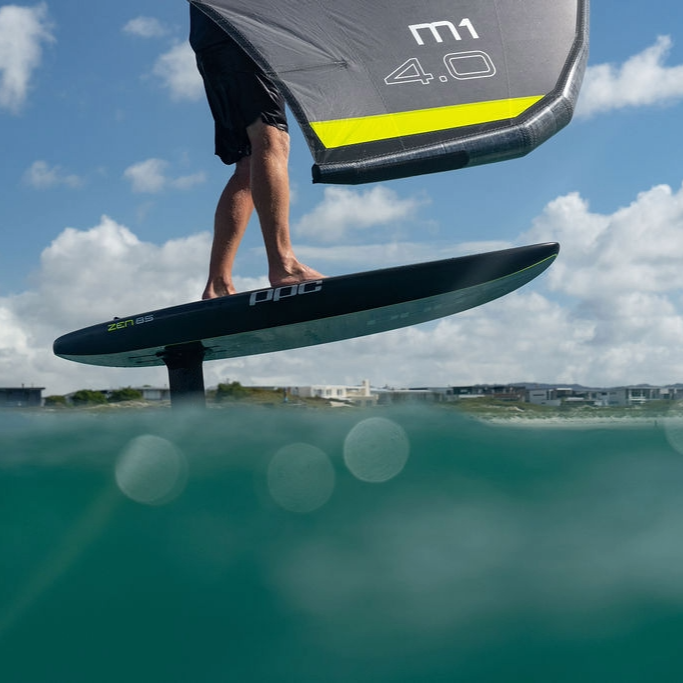
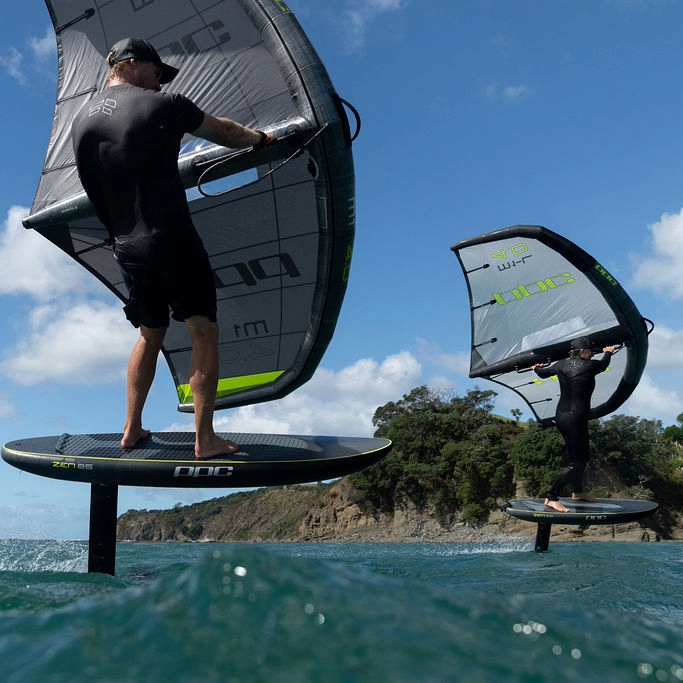
Wing foiling has stolen meaningful market share from kitesurfing and windsurfing over the last five years. Most kite and wind riders who try wing foiling come back. This guide compares the three honestly — strengths, weaknesses, who each one fits.

Short version: wing foiling is the most accessible entry to riding above the water in 2026. Kitesurfing remains the king of jumps and committed downwinders. Windsurfing has the deepest culture and the most refined gear, but is harder to start.
The setup difference
Wing foiling. Pump the wing (2-3 minutes), attach handles or boom, walk to the water with the board and foil. Five minutes from car to water.
Kitesurfing. Lay out the kite, attach lines to bar, pump to size, hook in. Self-launch or assisted launch depending on the kite. Ten to fifteen minutes from car to water.
Windsurfing. Rig the sail (universal joint, mast, boom, downhaul, outhaul, battens). Carry the rig and the board separately. Fifteen to twenty minutes from car to water. Foil setup adds more.
The control difference
Wing foiling. Wing in hands, no lines. Let go of one handle, the wing depowers. Hold both, you're powered. Sheet in or out for power. Pass the wing overhead for tacks and jibes. Direct, simple, low-commitment.
Kitesurfing. Kite tethered to a bar with safety release. Bar steers the kite, depowers it, releases it in emergencies. Higher upside (jumping, downwinding fast) and higher downside (lofting, line tangles). Requires structured training.
Windsurfing. Sail attached to board via universal joint. Stand and balance the rig. Use the mast and boom to position the sail and steer. Long learning curve to be efficient. Gentlest start, steepest progression.
The safety difference
Wing foiling wins safety for most riders. The wing depowers by releasing one handle. No lines to tangle with the foil. No risk of being lofted by a gust. The hazards that do exist (the foil itself, offshore wind, deep water) all apply to the other disciplines too — and wing foiling at least removes the line and rig risks.
Kitesurfing has the highest upside in skilled hands and the highest downside in unskilled hands. Lessons are non-negotiable.
Windsurfing is safest at low skill (the rig drops in the water harmlessly) but exposes you to high-speed crashes once you're on foil.
Learning curves compared
Wing foiling. Three to ten sessions to ride consistently on the foil. The friendliest learning curve of the three. Lessons help but self-teaching is possible.
Kitesurfing. Lessons required — typically 6-12 hours of coaching before you're riding independently. Self-teaching has a real safety risk. Once on the water, progression is fast.
Windsurfing. Standing up and sailing across the wind comes in your first session. But progressing to planing, then to foil, then to high-wind sailing takes years rather than months.
Performance compared
Top speeds. Wing foiling at race level (Sonic FDS-class wings) is approaching 30+ knots in the right conditions. Kitesurfing matches that. Windsurfing has held outright speed records but on highly specialised gear and conditions.
Wave riding. All three work in waves. Wing foiling rides above the wave, surfing energy without breaking. Kitesurfing for jumps and big-air. Windsurf wave sailing for radical wave riding. Wing wave is the fastest-growing of the three.
Light wind. Wing foiling with a 6m or parawing covers down to 8 knots. Kitesurfing similar with a 12m+ kite. Windsurfing struggles below 12 knots without specialist gear.
Cost compared
All three cost about the same to gear up at entry level — NZD $5,000-$8,000 for a complete kit. Higher-end gear pushes higher across the board.
Wing foiling has the simplest path to a complete kit: board, wing, foil, leashes, optional wetsuit. Kitesurfing adds kite, bar, lines, harness. Windsurfing adds sails, masts, booms, multiple board sizes.
Where each one wins
Wing foiling wins: accessibility, safety, setup speed, modern foil-first feel, light wind versatility, gear simplicity.
Kitesurfing wins: jumps and big-air, downwinders, beach culture in established kite spots.
Windsurfing wins: wave riding heritage, raw speed potential, gear refinement after 40+ years.
The honest take from a wing foiling brand
PPC builds wing foiling gear, so naturally we're going to say wing foiling is the entry point most riders should start with in 2026. But the case is real: setup is faster, safety is better, learning curve is friendlier, and the gear is more accessible.
If you already kitesurf or windsurf, wing foiling is the smallest jump. Your foil control transfers, your water sense transfers, your weather reading transfers. Three sessions in and you'll feel at home.
If you're starting from scratch, wing foiling is the easiest of the three to start in. PPC's wing foiling for beginners page covers the practical path. Lessons and demos are available in Auckland.
Common questions
Which is easier to learn — wing foiling, kitesurfing or windsurfing?
Wing foiling is generally the friendliest entry. The wing depowers instantly when you let go. No lines to tangle, no rig to balance. Most riders are foiling within 3-10 sessions. Kitesurfing is more committing (you're tethered to a powerful kite). Windsurfing has the gentlest start but the slowest progression to the foil.
Which is safer?
Wing foiling is the safest of the three for most riders. No lines mean no risk of being lofted. You can drop the wing instantly. The main hazards are the foil itself (always wear helmet and impact vest) and offshore wind. Kitesurfing has higher upside-and-downside risk. Windsurfing is safest at low skill, gets more exposed at high speed.
Which requires the most gear?
Windsurfing has the heaviest rig setup time and the most pieces. Kitesurfing has lines, bar, kite pumped to size — moderate setup. Wing foiling has the simplest setup once you're past the foil assembly — pump the wing, walk to the water.
Which performs best in light wind?
Wing foiling and kitesurfing both work in light wind with the right gear (big wing or big kite). Windsurfing struggles below 12 knots without specialist gear. For 8-12 knot light wind days, wing foiling with a 6m or parawing wins for most riders.
Which is fastest?
Wing foiling has the highest top speeds for skilled riders on race gear (Sonic FDS approaching 30+ knots). Kitesurfing speeds are similar in the right conditions. Windsurfing has held outright speed records but on specialist sail and conditions.
Which is best for waves?
All three work in waves but for different things. Wing foiling rides above the wave, surfing the energy without breaking. Kitesurfing for jumps and big-air. Windsurfing classic wave sailing for radical wave riding. Wing wave foiling is the fastest-growing wave discipline.
Which can I learn solo?
Wing foiling — the wing depowers instantly so you can rescue yourself. Kitesurfing is hard to learn solo (lessons are typically required for safety). Windsurfing is solo-able but slower progress without coaching.
Which gear costs the most?
All three are expensive at gear-up cost. A complete wing foiling kit runs NZD $6,000-$8,000 for beginners. Kitesurfing is similar. Windsurfing varies wider — modern foil setups can match wing foiling costs, traditional setups are cheaper.
Can I do all three with overlapping gear?
Limited overlap. The foil itself can sometimes cross disciplines (wing and kite foil setups share parts). Boards are typically discipline-specific. Wings and kites are not interchangeable.
Should I switch from kitesurfing or windsurfing to wing foiling?
Many do. Wing foiling has captured former kite and wind riders because it combines the freedom of riding without a fixed rig with much friendlier safety and setup. If you've already got foiling experience from kite or windsurfing, wing foiling adopts very quickly.